Showing posts sorted by date for query Toshiba. Sort by relevance Show all posts

Friday, March 16, 2007

Intel suffered but AMD surged in 2006, iSuppli says

Press release, March 16; Rodney Chan, DigiTimes.com [Friday 16 March 2007]

It was a tale of two companies in the semiconductor industry in 2006, with leading chip supplier Intel suffering a revenue decline, while rival AMD nearly doubled its sales, according to iSuppli.

"For US microprocessor giant Intel, 2006 was the worst of times, as its global semiconductor revenue dropped by 11.1% from 2005," said Dale Ford, vice president of market intelligence for iSuppli. "The revenue decline, which was due to Intel's bleak performance in its core PC microprocessor and flash-memory businesses, erased nearly all of the company's sales gains from its strong year in 2005. Intel's 2006 revenue of US$31.5 billion was less than half a percentage point higher than its sales in 2004."

"For Intel's smaller US rival, AMD, 2006 was the best of times as it achieved a whopping 91.6% increase in revenue for the year, partly due to a major acquisition, but also because of strong gains in microprocessor market share," Ford added.

This robust increase in revenue caused AMD's ranking to rise to eighth place in 2006, up seven positions from the 15th rank in 2005.

The divergent performances of Intel and AMD came during a 2006 when global semiconductor industry revenue rose by 9.3% to reach US$260.2 billion, up from US$237.98 billion in 2005. This is slightly higher than the 9% growth iSuppli predicted in its preliminary market share estimate compiled in November and released in early December.

Intel in 2006 faced hard times in its microprocessor and flash-memory businesses, which together accounted for 83% of total company revenue last year. The company's combined microprocessor and flash revenue in 2006 fell to its lowest level since 2003 as Intel faced rising competitive pressure in those markets. The revenue decline resulted in Intel's market share falling to 12.1 percent, its lowest level since before 2000.

Meanwhile, AMD in 2006 gained PC microprocessor market share at Intel's expense. AMD's PC microprocessor revenue rose by 35.5% in 2006 and its market share in that product segment increased to 16.1%, up 5 percentage points from 11.1% in 2005.

AMD's revenue also was boosted substantially by its acquisition of graphics chip seller ATI Technologies in 2006.

Looking beyond Intel and AMD, 2006 was a banner year for the leading pure-play memory chip suppliers.

Memory supplier Hynix Semiconductor of South Korea leapt to the seventh-place position in 2006, up from 11th in 2005 as its revenue surged by an impressive 41.5%. Hynix's memory revenue growth of US$2.3 billion surpassed the US$1.8 billion memory sales increase posted by memory-chip leader Samsung Electronics in 2006.

Germany's Qimonda, a newly created pure-play memory company formed from the spin-off of Infineon's memory business, increased its revenue by 54.9% in 2006.

However, the fastest growing memory supplier in 2006 and the quickest expanding supplier among the world's top-25 chip sellers-was Japan's Elpida Memory. Elpida's revenue nearly doubled in 2006, rising by 98.6% from 2005. This caused the company's ranking to rise to 19th in 2006, up from 28th in 2005.

Memory ICs were the key segment driving the growth of the overall semiconductor industry in 2006, with revenue in this area rising by 22.7%. A stronger-than-anticipated revenue increase in the fourth quarter boosted annual growth for DRAM to 35.2% in 2006.

(c) www.digitimes.com

Uni.Technology Tags: , , , , ,

Thursday, February 22, 2007

The Future of HDMI

by Tuan Nguyen

Is 2007 the year of the display format wars? A look at the licensing structures of these formats reveals more

HDMIUnfortunately, consumers will be faced a total of three display standards in 2007 -- and even more in 2008. Along with HDMI, computers will start to ship with DisplayPort and the Universal Display Interface (UDI) this year.  UDI is electrically compatible with DVI and HDMI, but does not carry the same licensing fees as either and has a stripped down feature set.  DisplayPort is not compatible with any existing signaling format.
One of the primary concerns for these new standards is cost and interoperability.  Expensive HDMI and HDCP certification is cited as one of the culprits delaying AMD 690G motherboards.
High fidelity signaling backers are split into two licensing camps: one supporting the DVI-derivatives (DVI-HDCP, HDMI, UDI) and the other supporting DisplayPort. AMD, Dell, Genesis Microchip, Hewlett-Packard, Molex, NVIDIA, Philips, Samsung and Tyco Electronics are supporters of DisplayPort; Hitachi, Panasonic, Philips, Sony, Silicon Image, Thomson and Toshiba compose the primary backers of HDMI. A significant portion of the DisplayPort supporters also have interests in HDMI.  Earlier last year, several manufacturers including Sapphire and PowerColor announced HDMI-enabled graphics cards based on ATI GPUs. MSI also announced HDMI cards based on NVIDIA GPUs.
When DailyTech asked why HDMI was taking a long time to appear in PC products, Leslie Chard, president of HDMI Licensing LLC, said "Right now most manufacturers are considering the cost of adding HDMI to their graphics products. Since HDMI is based mainly on DVI signals, the technology is already available in graphics processors. HDMI is everywhere -- consumer electronics, home entertainment and now companies are demanding the technology for smaller handhelds. You can't beat HDMI's cross platform compatibility."

Joe Lee, director of marketing for Silicon Image, added "Card manufacturers now only have to consider ways of grabbing the sound output through the PCI Express bus and adding the cost of the physical connector. If card manufacturers can finish writing the special [drivers] needed to grab the audio, everything would be set. Windows Vista should help drive HDMI forward."
According to initial reports, DisplayPort was heralded as a royalty-free technology. As it stands today, DisplayPort is royalty free but is composed with well over 200 patents. According to VESA, the committee that overlooks over the DisplayPort standard, the intellectual property (IP) holders are not held fixed and can and may charge a "reasonable" fee for the technologies used in DisplayPort.
Chard took a shot at DisplayPort, claiming "These IP holders are free to charge royalties under RAND [Reasonable and Non-Discriminatory] terms.  Until these IP holders make a public commitment, manufacturers have no idea what this rate will be.  Moreover, additional IP holders may come forward and charge additional royalties in the future; this is especially true if the DisplayPort standard ever evolves to incorporate advanced new technologies." 
HDMI's fees are already disclosed -- $0.04 per product and a small minimal fee for the HDCP keys, if used. HDMI Licensing LCC reduced the fees associated with using the technology late last year.
The largest hurdle DisplayPort faces, besides getting out the door, is interoperability with other devices.  DisplayPort is not compatible with HDMI, UDI or DVI.  The hurdle in jumping from one signaling protocol to the other is that the DVI-derivative protocols use HDCP, DisplayPort uses DPCP and HDCP.   VESA partners claim they will develop devices that allow HDMI to DisplayPort conversion, though doing so would mitigate DPCP.  Lee points out that this is essentially against the whole principle of a content protection protocol in the first place: if someone can freely negotiate between multiple or non-existent protocols that aren't under the same certification umbrella, then why have a certification process at all?
It has not been disclosed yet as to whether or not DisplayPort implementers may be required to pay royalties for the HDCP and Display Port Content Protection (DPCP) conversion either.
As of right now, the consumer electronics playing field is blanketed with HDMI-enabled products. The technology also recently entered its 1.3 revision, supporting features such as higher resolution and deep-color (wider color gamut) -- Sony's PlayStation 3 supports HDMI 1.3.  Philips, the inventor of DisplayPort's content protection scheme DPCP, recently announced a wireless version of HDMI.
AMD is expected to launch DisplayPort compatible GPUs later this year with NVIDIA opting for the standard as well. Early last year, Silicon Image stated that UDI will end up replacing both HDMI and DVI standards on the PC when it becomes available to reduce licensing fees, though it will still be compatible with the older standards.  

(c) www.dailytech.com

Saturday, January 6, 2007

Toshiba unveils world's first HD DVD writer

toshibaHDDVD.jpg

Always expect firsts from Toshiba America, the maker of computers/storage/projectors and so much more. The company announced the world's first HD DVD burner for desktop computers. (Wondering what HD DVDs are? Catch up on a story I wrote last year)

We knew this was coming. High-def DVD players has been available for since April 2006 (mostly thanks to Toshiba's computer and consumer electronics divisions). Toshiba says more than 1.5 million HD DVD movies have been sold. But who can resist using the same discs for storage purposes? Since high-definition video needs oodles of gigabytes, the discs can hold 30 GBs of digital files (that's approximately up to five full-length standard DVD films, up to 7,500 MP3 songs or up to 30,000 high-quality images, according to Toshiba).

The SD-H903A internal drive will be sold to computer companies and manufacturers beginning in February. The good news for consumers, we may start seeing PCs with HD DVD burners in the spring or summer.

Other specs:
It only writes HD DVD content in real time (that's 1x speed)
Also compatible with all older DVD and CD formats.

(c) blogs.ocregister.com

Toshiba Designing New Reactor

http://www.stegen.com/images/toshiba_logo.jpgJapan's Toshiba Corp. (6502.TO) said Friday it was independently designing a new boiling-water reactor, or BWR, for use in nuclear power plants.
"We are making a preliminary conceptual design for a next-generation" BWR, a company spokesman said.
Toshiba, a Tokyo-based company whose businesses run from consumer electronics to large industrial infrastructure, has developed its nuclear reactor business together with General Electric Co. (GE) for over 40 years.
But in November, GE agreed to integrate its nuclear operations with Hitachi Ltd. (6501.TO), fueling speculation that GE and Toshiba could eventually become rivals. A report Friday in The Nikkei said Toshiba would market a BWR on its own by 2015.
The Toshiba spokesman said the new reactor was being chiefly designed for the domestic market, as the Japanese government was planning to upgrade its current generation of reactors from around 2030.
"It is too premature to discuss competition" with GE, he said, adding that the two companies are still jointly developing boiling water reactors.

(c) neinuclearnotes.blogspot.com

Monday, December 18, 2006

Costa Living: Why Blu-ray Will Win

Blu-ray Will Win

This column is about actually testing and living with cutting-edge technology, which is what makes it different from the artificial rhetoric, deliberate provocation, and blatant bloviating that is increasingly common in technology journalism. Still, there comes a time when you just have to make a straight argument in favor of or against a new technology. That's why I have to say, in the HD-DVD versus Blu-ray battle, Blu-ray is going to hand HD-DVD its ass on a sliding platter.

HD-DVD had a head start, to be sure. And some industry luminaries jumped on board with two feet. First mover advantage and the blessing of Microsoft? How could it fail? Keep watching, it will. To be fair, there is nothing inherently wrong with HD-DVD, and it isn't vastly inferior or anti-consumer in any particular way. It just doesn't quite match Blu-ray in a number of key areas. Therefore, it will lose.

Capacity

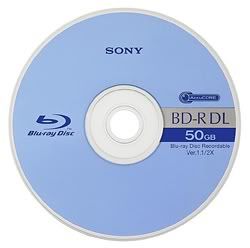
HD-DVDs are easier and cheaper to make, but Blu-ray discs store more data. You can get 25GB on a single-layer Blu-ray disc, compared to 15GB on an HD-DVD. And the first double layer 50GB Blu-ray discs just hit the market. The first movie to get this honor: Adam Sandler's Click. (Because fart jokes are way funnier in PCM uncompressed audio.). Think of it this way: Has any format war ever been won by the technology with less capacity? If you can think of one, e-mail me.

Hardware support

HD-DVD has two main backers: Toshiba and Microsoft. Toshiba has used its clout to push HD-DVD into a few laptops, but Blu-ray has a much broader base of support. Panasonic, Sony, Philips, and Samsung will all have players shipping by the end of December. Yes, Blu-ray players have been plagued by delays. Still, it isn't like HD-DVD players have been flying off store shelves in the meantime.

Studio Support

There are about 100 Blu-ray titles available for sale right now, but that number isn't so significant. Right now, there aren't too many players out there, so studios are proceeding cautiously. That said, Blu-ray has the support of seven of the eight largest movie studios. And five of those have pledged to support Blu-ray exclusively. That means if you want to watch a Sony, Disney, or 20th Century Fox film in high def, it has to be on Blu-ray.

The argument has been made by people I trust and respect that the whole packaged media business is doomed anyway. Soon we will all be ordering our movies on demand either from our cable provider, through iTunes, or via Bittorrent. There is some truth to this. I already watch a ton of downloaded TV and movies on my PC. The thing to remember here is that this isn't a high-definition experience. Broadband is great, but sending high-definition video, to say nothing of lossless audio, bonus tracks, and interactive features, all out over the Internet just isn't practical over existing technologies, or anything we are likely to see soon. Anyway, that trend would kill HD-DVD just as fast as Blu-ray.

Of course, I wouldn't buy a Blu-ray player now. They are too damn expensive, and I still need to make the switch to HD at home. Then again, if it was part of a PS3 if might be worth it. Sony sold 195,000 PS3s in the U.S. in November alone. And every one of them is a fully functioning Blu-ray player. I dare say that number alone blows away HD-DVD sales for the last year. Nuff said.

[Thanks goes to www.gearlog.com for this article]

Sunday, December 17, 2006

Sony, Toshiba, NEC Electronics Develop 45nm Chip Platform

Sony, Toshiba, NEC Electronics Develop 45nm Chip Platform

Sony, Toshiba and NEC Electronics Corp., said on Thursday they had jointly developed technology to mass produce cutting-edge chips.

The platform developed by the three Japanese companies will be used to make system chips, which combine multiple functions on a sliver of silicon, using 45-nanometre technology, the firms said in a joint press release. This technology was unveiled on December 13 (US Pacific Standard Time) at Session 27.2 of the 2006 International Electron Devices Meeting (IEDM) in San Francisco, CA.

Chip makers worldwide are locked in a race to lower production costs on 90-, 65- and 45-nanometre chips, with the smaller circuitry widths allowing more power per chip for complex devices.

The three companies are developing a platform for low-power system chips, to be completed in early 2007.

Toshiba and NEC Electronics are also working to standardize technology to make advanced chips with circuitry width of 45-nanometres or finer with Fujitsu and Renesas Technology Corp.

The key elements of the new platform are a fully renovated MOSFET integration scheme, and a hybrid structure with a low dielectric constant (low-k) film that assures high performance and reliability.

The MOSFET integration process applies strained silicon technology to the transistor, utilizing crystal lattice distortion to induce performance-boosting local strain at key locations. Optimization of the strain boosts transistor performance to a level 30% faster than that achieved in the present generation of technology.

Application of a low-k film in the intermediate metal layer of the chip during the back-end process reduces parasitic capacitance and improves circuit performance. The three partners confirmed a dielectric gate film with an effective 15-year lifetime, a span surpassing the average lifetime of a high performance LSI. They also carried out tests of the platform and proved a layer yield of over 98% for the challenging back-end process, confirming that the technology achieves the reliability essential for mass production.

In addition, the partners have led the industry in applying immersion lithography technology with an ultra-high numerical aperture (NA) of over 1.0 to formation of the transistor node, achieving a cell with an area of 0.248 micron m2 in an ultra high density SRAM. The new cell is the smallest yet achieved.

The three companies are simultaneously developing two 45nm processes -- the current platform, which is ideal for high performance LSIs, as well as a platform for applications with low power consumption requirements, which is expected to be completed in early 2007.

[original post: www.cdrinfo.com]

Tag Cloud
