Showing posts sorted by relevance for query Samsung. Sort by date Show all posts

Friday, December 22, 2006

Samsung Unveils Mobile Phone With 'Optical Joystick'

 By Jennifer LeClaire
Samsung Unveils Mobile Phone With 'Optical Joystick'Samsung on Tuesday released a new cell phone, the SCH-V960, touting its unique "optical joystick," which is used for navigating menus, as a "world's first." The phone also has a 2 megapixel camera, GPS and Bluetooth functionality, and a screen that automatically adjusts its brightness based on ambient light levels to conserve battery life.

Samsung Electronics' latest mobile phone sports a gaming element -- a joystick. The company on Tuesday released the SCH-V960, which features a unique "optical joystick" to help users navigate the wireless device's menu and user interface.

Unlike most cellular devices -- which depend on the use of a scroll bar on the side of the phone or a series of clickable buttons to navigate the on-screen menus -- Samsung's joystick is reminiscent of a PC mouse.

Like an iPod

Unlike most cellular devices -- which depend on the use of a scroll bar on the side of the phone or clicking a series of buttons to navigate the on-screen menus -- Samsung's joystick is reminiscent of a PC mouse.

Users can operate the optical joystick by placing one finger on it and moving a cursor to navigate through the menu. At a high level, the process is similar to navigating an iPod, though it uses different technology.

Optical sensors read and react to finger movements, breaking down the traditional four-way menu navigation.

Users can point the cursor and click directly on icons in order to gain direct access to frequently used menus, such as the photo album, messaging and music functions. They can also use the optical joystick to scroll through play lists while listening to music.

Like a BlackBerry

With this joystick, Samsung can claim a unique innovation in the cell phone market, according to M:Metrics Senior Analyst John Jackson.

The concept echoes the trackball functionality of the new Pearl smartphone from BlackBerry-maker Research In Motion (Nasdaq: RIMM) , he said.

"Samsung's optical joystick is certainly innovative. It's a good example of progress toward solving some of the usability conundrums that have always characterized handsets. Navigation and user interface advances are something that will continue to be a key area of focus and investment and innovation," Jackson added.

Although Samsung called its optical joystick "revolutionary," Jackson won't go that far. However, he did say that consumers will appreciate the innovation.

As advanced mobile applications become easier to use, and as their menus become easier to navigate, consumers will be more drawn to value-added services. "That means more money going through the wireless channel," Jackson said.
Smart Lighting

The V960's illumination sensor enables "smart lighting" -- a feature that automatically controls the brightness of the LCD screen and keypad, designed to protect users from eyestrain and minimize the device's power consumption.

In addition, the V960 supports a 2 megapixel camera, as well as global positioning system and Bluetooth functionality. The device will be launched in the Korean market at the end of December.

(c) www.technewsworld.com

Wednesday, January 3, 2007

Samsung Samples 50nm 16Gb NAND Flash

Samsung inches closer to making SSDs more mainstream

When it comes to storage technology on computers, hard drive technology has advanced the slowest as far as performance is concerned. Companies like Samsung are looking to Flash Solid State Disks (SSDs) to replace the spinning disk and reduce loading times for applications.

SSDs have the advantage of rapid response times without having to wait for a hard drive to spin up/seek and have drastically reduced power consumption compared to traditional hard drives. SSDs use zero watts when not being accessed, and as little as 200 milliwatts during read/write activities.

Given the lower power requirements, company’s like Sony and Fujitsu are looking to Samsung to provide SSDs for their mobile computers. Samsung also uses its SSD drives on the Q30 notebook and Q1 UMPC.

Samsung announced today that it has produced samples of the world's first 16Gb NAND flash memory device built on a 50 nanometer process. The multi-level cell (MLC) design uses a 4KB page size instead of the 2KB used in competing designs. As a result, read speeds are double that of 2KB designs while write speeds are increased by 150%.

The increased storage capacity and faster write speeds will help Samsung reach its goal of producing 128GB SSDs by the first half of 2008.

Samsung will begin mass production its new MLC 16Gb NAND flash memory chips in Q1 2007.

(c) www.dailytech.com

Friday, January 5, 2007

Samsung announces double-sided LCDs

by Ken Fisher

If two heads are better than one, are two faces on a single LCD a no-brainer? Samsung today announced that it has created thin-film transistor, liquid crystal display (TFT-LCD) panels capable of showing independent images on both sides of an LCD screen. Unlike other two-faced LCDs which only show an image and its reverse on the flipside, the Samsung solution can display two different images. According to Samsung, the dual-sided LCDs have been designed primarily for use in mobile products. One obvious application would be cell phones that currently have two separate displays.

Is this a battery-life nightmare in the making? Samsung says no. Although there are two visual surfaces, the new dual-sided LCD uses one backlight. One side of the LCD also helps out with illumination, using the light trapped by one side's "transmissive mode" projection to illuminate the reflective side. Transmissive LCDs are those which are actively illuminated from behind LCDs cells, and make up most LCDs that we look at these days. Reflective LCDs are just the opposite: they rely on ambient light for illumination, and therefore are less clear and offer less contrast than transmissive LCDs. You've seen these on digital watches or on the exteriors of many flip phones (some have backlights that can be activated).

How do you display two images on a single LCD? Normal LCDs have TFT gates that each operate a single pixel, but Samsung's dual-sided LCDs put two control gates on each pixel, allowing it to control each side independently without having to double the circuitry. Complex calculations take care of the rest.

Samsung's dual-sided LCD panels

Samsung will begin mass production of a 2.6mm thick and 2.22" wide QVGA (240 x 320 pixel) dual-sided panel in the first half of this year. The company said it will show off the display at CES, so we'll be sure to check it out and ask them if they expect this technology to ever make its way outside of mobile devices.

(c) www.arstechnica.com

Thursday, January 4, 2007

Samsung to unveil large LCD TVs

by Eric A. Taub

http://www.whisperbrand.com/blog/i/samsung_logo.jpgSamsung, the world's largest seller of televisions, will introduce at next week's Consumer Electronics Show a new line of rear-projection liquid crystal display televisions that will not be much thicker than flat-panel TVs but will cost about 30 percent less.
The new sets, aimed at those who want a bigger set but cannot afford a plasma TV, will come in 50- to 60-inch sizes. At 10 inches deep, they can be hung on a wall.

While consumers are embracing LCD flat-panel TVs in ever-larger sizes, Samsung has also recommitted itself to plasma TV and will double its current plasma production capacity later this year, said G.S. Choi, the company's president for digital media, in an interview from South Korea.

Plasma will continue to dominate in larger sizes, and the company will add an 80-inch model to its lineup this year, Choi said. To help consumers fit these larger sizes in their homes, Samsung said it was redesigning the TV frames to make them up to 30 percent thinner.

At the electronics show, held annually in Las Vegas, Samsung will also introduce a wireless plasma TV that will be able to receive HDTV programming sent from an HD DVD or Blu-ray player or set-top box. Because there will be no cables to hide, consumers may be more likely to hang such a plasma display on a wall.

The company, which was the first to introduce a Blu-ray high-definition DVD player last year, will announce its second-generation player next week. The new model is expected to cost about 20 percent less than the current version, but will have more interactive functions.

Although LG will introduce a dual format HD DVD/Blu-ray player, Samsung has no plans to do the same. "If the market is still divided, we could do a dual-format player, but we will wait and see," Choi said.

Entire contents, Copyright © 2007 The New York Times. All rights reserved.

Friday, March 16, 2007

Intel suffered but AMD surged in 2006, iSuppli says

Press release, March 16; Rodney Chan, DigiTimes.com [Friday 16 March 2007]

It was a tale of two companies in the semiconductor industry in 2006, with leading chip supplier Intel suffering a revenue decline, while rival AMD nearly doubled its sales, according to iSuppli.

"For US microprocessor giant Intel, 2006 was the worst of times, as its global semiconductor revenue dropped by 11.1% from 2005," said Dale Ford, vice president of market intelligence for iSuppli. "The revenue decline, which was due to Intel's bleak performance in its core PC microprocessor and flash-memory businesses, erased nearly all of the company's sales gains from its strong year in 2005. Intel's 2006 revenue of US$31.5 billion was less than half a percentage point higher than its sales in 2004."

"For Intel's smaller US rival, AMD, 2006 was the best of times as it achieved a whopping 91.6% increase in revenue for the year, partly due to a major acquisition, but also because of strong gains in microprocessor market share," Ford added.

This robust increase in revenue caused AMD's ranking to rise to eighth place in 2006, up seven positions from the 15th rank in 2005.

The divergent performances of Intel and AMD came during a 2006 when global semiconductor industry revenue rose by 9.3% to reach US$260.2 billion, up from US$237.98 billion in 2005. This is slightly higher than the 9% growth iSuppli predicted in its preliminary market share estimate compiled in November and released in early December.

Intel in 2006 faced hard times in its microprocessor and flash-memory businesses, which together accounted for 83% of total company revenue last year. The company's combined microprocessor and flash revenue in 2006 fell to its lowest level since 2003 as Intel faced rising competitive pressure in those markets. The revenue decline resulted in Intel's market share falling to 12.1 percent, its lowest level since before 2000.

Meanwhile, AMD in 2006 gained PC microprocessor market share at Intel's expense. AMD's PC microprocessor revenue rose by 35.5% in 2006 and its market share in that product segment increased to 16.1%, up 5 percentage points from 11.1% in 2005.

AMD's revenue also was boosted substantially by its acquisition of graphics chip seller ATI Technologies in 2006.

Looking beyond Intel and AMD, 2006 was a banner year for the leading pure-play memory chip suppliers.

Memory supplier Hynix Semiconductor of South Korea leapt to the seventh-place position in 2006, up from 11th in 2005 as its revenue surged by an impressive 41.5%. Hynix's memory revenue growth of US$2.3 billion surpassed the US$1.8 billion memory sales increase posted by memory-chip leader Samsung Electronics in 2006.

Germany's Qimonda, a newly created pure-play memory company formed from the spin-off of Infineon's memory business, increased its revenue by 54.9% in 2006.

However, the fastest growing memory supplier in 2006 and the quickest expanding supplier among the world's top-25 chip sellers-was Japan's Elpida Memory. Elpida's revenue nearly doubled in 2006, rising by 98.6% from 2005. This caused the company's ranking to rise to 19th in 2006, up from 28th in 2005.

Memory ICs were the key segment driving the growth of the overall semiconductor industry in 2006, with revenue in this area rising by 22.7%. A stronger-than-anticipated revenue increase in the fourth quarter boosted annual growth for DRAM to 35.2% in 2006.

(c) www.digitimes.com

Uni.Technology Tags: , , , , ,

Monday, December 18, 2006

Costa Living: Why Blu-ray Will Win

Blu-ray Will Win

This column is about actually testing and living with cutting-edge technology, which is what makes it different from the artificial rhetoric, deliberate provocation, and blatant bloviating that is increasingly common in technology journalism. Still, there comes a time when you just have to make a straight argument in favor of or against a new technology. That's why I have to say, in the HD-DVD versus Blu-ray battle, Blu-ray is going to hand HD-DVD its ass on a sliding platter.

HD-DVD had a head start, to be sure. And some industry luminaries jumped on board with two feet. First mover advantage and the blessing of Microsoft? How could it fail? Keep watching, it will. To be fair, there is nothing inherently wrong with HD-DVD, and it isn't vastly inferior or anti-consumer in any particular way. It just doesn't quite match Blu-ray in a number of key areas. Therefore, it will lose.

Capacity

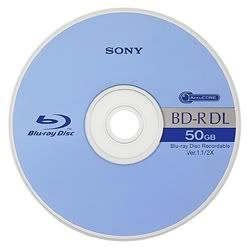
HD-DVDs are easier and cheaper to make, but Blu-ray discs store more data. You can get 25GB on a single-layer Blu-ray disc, compared to 15GB on an HD-DVD. And the first double layer 50GB Blu-ray discs just hit the market. The first movie to get this honor: Adam Sandler's Click. (Because fart jokes are way funnier in PCM uncompressed audio.). Think of it this way: Has any format war ever been won by the technology with less capacity? If you can think of one, e-mail me.

Hardware support

HD-DVD has two main backers: Toshiba and Microsoft. Toshiba has used its clout to push HD-DVD into a few laptops, but Blu-ray has a much broader base of support. Panasonic, Sony, Philips, and Samsung will all have players shipping by the end of December. Yes, Blu-ray players have been plagued by delays. Still, it isn't like HD-DVD players have been flying off store shelves in the meantime.

Studio Support

There are about 100 Blu-ray titles available for sale right now, but that number isn't so significant. Right now, there aren't too many players out there, so studios are proceeding cautiously. That said, Blu-ray has the support of seven of the eight largest movie studios. And five of those have pledged to support Blu-ray exclusively. That means if you want to watch a Sony, Disney, or 20th Century Fox film in high def, it has to be on Blu-ray.

The argument has been made by people I trust and respect that the whole packaged media business is doomed anyway. Soon we will all be ordering our movies on demand either from our cable provider, through iTunes, or via Bittorrent. There is some truth to this. I already watch a ton of downloaded TV and movies on my PC. The thing to remember here is that this isn't a high-definition experience. Broadband is great, but sending high-definition video, to say nothing of lossless audio, bonus tracks, and interactive features, all out over the Internet just isn't practical over existing technologies, or anything we are likely to see soon. Anyway, that trend would kill HD-DVD just as fast as Blu-ray.

Of course, I wouldn't buy a Blu-ray player now. They are too damn expensive, and I still need to make the switch to HD at home. Then again, if it was part of a PS3 if might be worth it. Sony sold 195,000 PS3s in the U.S. in November alone. And every one of them is a fully functioning Blu-ray player. I dare say that number alone blows away HD-DVD sales for the last year. Nuff said.

[Thanks goes to www.gearlog.com for this article]

Thursday, January 4, 2007

LG to Launch Dual-format Blu-ray Disc and HD DVD Player

http://www.lgelectronics.co.nz/logos/LG%20LOGO%20tricovert.jpgIt was bound to happen: In the mess known as the high-def format wars, eventually, it was clear a manufacturer would cross party lines and release a single player capable of handling both Blu-ray Discs and HD DVD discs. The question wasn't if; it was a question of when.

LG Electronics is the first to cross that line: The company has just announced it will be launching the first dual-format high-definition disc player at the Consumer Electronics Show in Las Vegas next week. The LG press release issued in Korea early Thursday morning is short on details--the player will launch in "early 2007", but beyond that, we have no information on pricing--but that's of little consequence for now. I imagine the details will become clear by Sunday, when LG holds its press conference at CES.

LG stated it was considering a dual-format player at the CeBIT show last March, but the company has been quiet about its progress until now. The company is the first to formally announce a dual-format player; prior to this, Ricoh and NEC had both announced they had developed components that could read both Blu-ray and HD DVD media, but neither had announced actual products. Samsung had also made rumblings about coming out with a dual-format player, but the company backtracked on those reports early last year.

The LG announcement dramatically alters the competitive landscape for Blu-ray Disc and HD DVD. The mere announcement of a dual-format player could stall the market for high-definition players and discs, as consumers anticipate the dual-format player's arrival. A dual-format player would offer consumers a hedge against obsolence, in the event one of the disc formats dies out over time.

And once the dual-format player does come out, it could ignite the market for high-definition players and discs, a market that's still in its infancy.

Price will likely play a big role, though, in the dual-format player's success. If the player is expensive--and, certainly, I expect it to carry a premium over a standalone player, at least at launch--its high price may deter consumers from buying right now. However, if the dual-format player's premium is an acceptable one to consumers, then the player could take off--in turn driving consumers to buy movies in high-definition, without having to worry about which studios are backing which disc format.

However, while a dual-format player will help consumers worried about buying into the wrong format, it won't help content producers. Dual-format players will remain a rarity, for at least the next year. If dual-format players do become the norm, studios will be faced with a quandary: Continue to support both formats, a costly endeavor, or release new and catalog content in just one of the disc formats--thereby foregoing support of those early adopters who bought into whichever disc format falls by the wayside.

Are you itching to buy a high-def disc player? Does news of a dual-format player make you more likely to buy a high-def disc player in the next year?

(c) blogs.pcworld.com

Thursday, February 22, 2007

The Future of HDMI

by Tuan Nguyen

Is 2007 the year of the display format wars? A look at the licensing structures of these formats reveals more

HDMIUnfortunately, consumers will be faced a total of three display standards in 2007 -- and even more in 2008. Along with HDMI, computers will start to ship with DisplayPort and the Universal Display Interface (UDI) this year.  UDI is electrically compatible with DVI and HDMI, but does not carry the same licensing fees as either and has a stripped down feature set.  DisplayPort is not compatible with any existing signaling format.
One of the primary concerns for these new standards is cost and interoperability.  Expensive HDMI and HDCP certification is cited as one of the culprits delaying AMD 690G motherboards.
High fidelity signaling backers are split into two licensing camps: one supporting the DVI-derivatives (DVI-HDCP, HDMI, UDI) and the other supporting DisplayPort. AMD, Dell, Genesis Microchip, Hewlett-Packard, Molex, NVIDIA, Philips, Samsung and Tyco Electronics are supporters of DisplayPort; Hitachi, Panasonic, Philips, Sony, Silicon Image, Thomson and Toshiba compose the primary backers of HDMI. A significant portion of the DisplayPort supporters also have interests in HDMI.  Earlier last year, several manufacturers including Sapphire and PowerColor announced HDMI-enabled graphics cards based on ATI GPUs. MSI also announced HDMI cards based on NVIDIA GPUs.
When DailyTech asked why HDMI was taking a long time to appear in PC products, Leslie Chard, president of HDMI Licensing LLC, said "Right now most manufacturers are considering the cost of adding HDMI to their graphics products. Since HDMI is based mainly on DVI signals, the technology is already available in graphics processors. HDMI is everywhere -- consumer electronics, home entertainment and now companies are demanding the technology for smaller handhelds. You can't beat HDMI's cross platform compatibility."

Joe Lee, director of marketing for Silicon Image, added "Card manufacturers now only have to consider ways of grabbing the sound output through the PCI Express bus and adding the cost of the physical connector. If card manufacturers can finish writing the special [drivers] needed to grab the audio, everything would be set. Windows Vista should help drive HDMI forward."
According to initial reports, DisplayPort was heralded as a royalty-free technology. As it stands today, DisplayPort is royalty free but is composed with well over 200 patents. According to VESA, the committee that overlooks over the DisplayPort standard, the intellectual property (IP) holders are not held fixed and can and may charge a "reasonable" fee for the technologies used in DisplayPort.
Chard took a shot at DisplayPort, claiming "These IP holders are free to charge royalties under RAND [Reasonable and Non-Discriminatory] terms.  Until these IP holders make a public commitment, manufacturers have no idea what this rate will be.  Moreover, additional IP holders may come forward and charge additional royalties in the future; this is especially true if the DisplayPort standard ever evolves to incorporate advanced new technologies." 
HDMI's fees are already disclosed -- $0.04 per product and a small minimal fee for the HDCP keys, if used. HDMI Licensing LCC reduced the fees associated with using the technology late last year.
The largest hurdle DisplayPort faces, besides getting out the door, is interoperability with other devices.  DisplayPort is not compatible with HDMI, UDI or DVI.  The hurdle in jumping from one signaling protocol to the other is that the DVI-derivative protocols use HDCP, DisplayPort uses DPCP and HDCP.   VESA partners claim they will develop devices that allow HDMI to DisplayPort conversion, though doing so would mitigate DPCP.  Lee points out that this is essentially against the whole principle of a content protection protocol in the first place: if someone can freely negotiate between multiple or non-existent protocols that aren't under the same certification umbrella, then why have a certification process at all?
It has not been disclosed yet as to whether or not DisplayPort implementers may be required to pay royalties for the HDCP and Display Port Content Protection (DPCP) conversion either.
As of right now, the consumer electronics playing field is blanketed with HDMI-enabled products. The technology also recently entered its 1.3 revision, supporting features such as higher resolution and deep-color (wider color gamut) -- Sony's PlayStation 3 supports HDMI 1.3.  Philips, the inventor of DisplayPort's content protection scheme DPCP, recently announced a wireless version of HDMI.
AMD is expected to launch DisplayPort compatible GPUs later this year with NVIDIA opting for the standard as well. Early last year, Silicon Image stated that UDI will end up replacing both HDMI and DVI standards on the PC when it becomes available to reduce licensing fees, though it will still be compatible with the older standards.  

(c) www.dailytech.com

Thursday, March 15, 2007

Intel to Sample Phase Change Memory This Year

by Marcus Yam

Intel claims it will mass produce phase change memory before the end of 2007

This week Intel privately shared parts of its roadmap for memory technologies through 2008. Intel’s progress on phase-change memory, PCM or PRAM, will soon be sampled to customers with mass production possible before the end of the year.


Phase change memory wafer manufactured at 90nm

Phase-change memory is positioned as a replacement for flash memory, as it has non-volatile characteristics, but is faster and can be scaled to smaller dimensions. Flash memory cells can degrade and become unreliable after as few as 10,000 writes, but PCM is much more resilient at more than 100 million write cycles. For these reasons, Intel believes that phase-change memory could one day replace DRAM.

“The phase-change memory gets pretty close to Nirvana,” said Ed Doller, CTO of Intel’s flash memory group. “It will start to displace some of the RAM in the system.”

For its implementation of phase-change memory, Intel has since 2000 licensed technology from Ovonyx Inc.. The Ovonyx technology uses the properties of chalcogenide glass, the same material found in CD-RW and DVD-RW, which can be switched between crystalline and amorphous states for binary functions.

Every potential PCRAM memory maker thus far licenses Ovonyx technology. According to Ovonyx’s Web site, the first licensee of the technology was Lockheed Martin in 1999, with Intel and STMicroelectronics in the following year. Four years after that, Nanochip signed an agreement. Elpida and Samsung were the next two in 2005, and Qimonda marks the latest with a signing this year.

IBM, Macronix and Qimonda detailed last December its recent developments on phase-change memory. Researchers at IBM’s labs demonstrated a prototype phase-change memory device that switched more than 500 times faster than flash while using less than one-half the power to write data into a cell. The IBM device’s cross-section is a minuscule 3 by 20 nanometers in size, far smaller than flash can be built today and equivalent to the industry’s chip-making capabilities targeted for 2015.

Intel’s initial phase-change technology, however, is already a reality, as the chipmaker revealed that it has produced a 90 nanometer phase-change memory wafer. At the 90 nanometer process size, the power requirements to write are approximate to that required for flash. Intel said that its early test work shows data retention abilities of greater than 10 years even at temperatures of 85 degree Celsius.

Intel touts PCM as a “new category of memory,” as its attributes are distinctly different, and typically superior to many of the memory technologies today as it combines the best attributes of RAM, NOR and NAND. Intel wouldn’t give a firm date on the availability of its phase-change memory as several details still need to be finalized after the sampling process.

“We're going to be using this to allow customers to get familiar with the technology and help us architect the next generation device.” Doller said. “We're hoping we can see [mass] production by the end of the year, but that depends on the customers.”

(c) www.dailytech.com


Uni.Technology Tags: , , ,

Tag Cloud
